
Custom Web Development vs Website Builders: Which Is Better?
An honest comparison of custom web development and website builders across performance, SEO, scalability, control and cost.
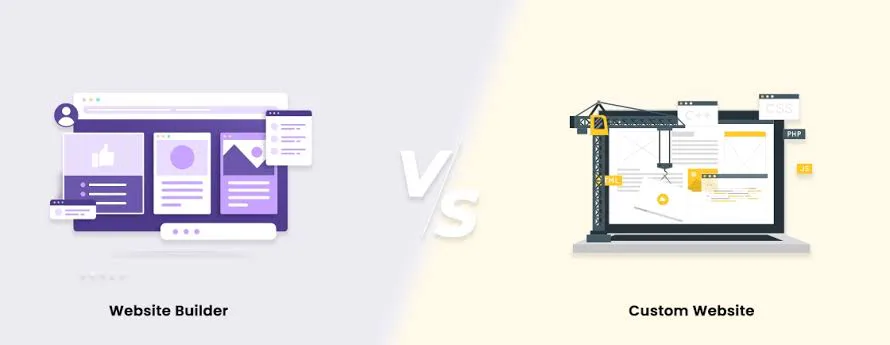
Website builders and custom web development are both valid ways to publish online. The better option depends on what the business needs the site to do. A simple service page may benefit from the speed of a builder, while a company with a complex sales journey, performance requirements or integrated business process may need a purpose-built platform. The useful comparison is not which option is universally superior; it is which one fits the required outcome over the next few years.
What website builders are good at
Website builders offer pre-made themes, visual editing and managed hosting, which can be valuable when a business needs to launch quickly with a modest budget. They are often appropriate for a small brochure site, an early event page or a simple catalogue where the main need is to communicate basic information. Teams without technical staff can make routine edits without a development workflow, which lowers the initial barrier to publishing.
The trade-off is that a builder works best when the business can work within its conventions. Templates, plugins and settings provide useful shortcuts, but they may also limit the precision of a unique conversion flow, a complex integration or a specialised content model. Before choosing a platform, list the pages, data, workflows and marketing requirements that the site must support—not only the visual style you want on launch day.
When custom web development pays off
Custom web development is valuable when the website is part of the product or operating model. A B2B platform may need a guided onboarding flow, CRM integration, secure customer areas and a reporting interface. An e-commerce website may require custom merchandising, inventory connections or a high-performance product experience. A professional services firm may need rich case studies, knowledge content and lead-routing logic that reflect how its sales team actually works.
React development and full stack development make it possible to build those experiences around clear requirements rather than force a process into a theme. The benefit is not technology for its own sake. It is control over performance, accessibility, security, content structure and integrations. That control should be matched with a realistic plan for maintenance, documentation and ownership after the first release.
Performance affects both experience and search
Fast pages help visitors complete the task they came to do. Slow loading, layout shifts and unresponsive controls create doubt at exactly the moment a customer is evaluating a business. Custom frontend development can reduce unnecessary code, optimise image delivery and prioritise the content that matters first. A builder can also perform well when configured carefully, but its themes and plugins may introduce assets that are not necessary for a particular page.
Performance should be measured, not assumed. Test important templates on real mobile conditions, review Core Web Vitals and investigate the source of any delay. Prioritise the pages that attract paid traffic or drive enquiries. A website development company should be able to explain what is being loaded, why it is needed and how future content edits will preserve a good experience.
SEO needs control and content discipline
Both approaches can support technical SEO fundamentals such as indexable pages, page titles, canonical URLs, structured data, image alt text and sitemaps. The practical question is whether the team can implement and maintain those details consistently. A custom system can expose exactly the fields an editor needs and prevent invalid variations. A builder can offer SEO controls, but a site may become inconsistent when many plugins or duplicate pages accumulate over time.
No platform automatically creates authority. Search visibility comes from clear page intent, useful original content, logical internal links and a reliable technical foundation. A custom content model can make it easier to publish service pages, articles and case studies in a consistent format; a builder can be enough when the content plan is simple and someone owns quality control.
Scalability is more than traffic
When teams say they need a scalable website, they often mean several things: the site should handle more visitors, support new content types, connect to new systems and remain manageable as the business changes. Website builders can scale a marketing site to a point, but a growing workflow may introduce constraints around data models, roles, automation or custom functionality. A web application development roadmap should identify those needs before they turn into urgent workarounds.
Custom development can separate the public marketing site from the systems that power operations, allowing each to evolve responsibly. It can also provide a better path for API integrations, localisation, user accounts and tailored administration. This does not mean every business needs a bespoke platform. It means the architecture should be proportionate to the business complexity you can already see.
Cost should include the next two years
A builder often has a lower initial cost because design, hosting and editing tools are bundled. A custom build usually costs more upfront because discovery, UX, development and quality assurance are tailored to the business. Comparing only the launch price can be misleading. Include subscription fees, paid plugins, change requests, performance fixes, integration limitations, content maintenance and the cost of a future migration.
The best financial choice is the one that removes material friction from growth. If a standard template closes the gap, use it. If the website is responsible for complex lead generation, revenue or customer workflows, a well-scoped custom build can be less expensive than years of compromises. Ask for a roadmap with phases so the investment matches the business stage.
A practical decision framework
Choose a website builder when the site is simple, speed to launch matters most, editing needs are straightforward and the business can work within a proven template. Choose custom web development when the journey, content, integrations or performance requirements are central to the company’s competitive advantage. In either case, start with audience needs, conversion goals and content responsibilities before discussing frameworks or templates.
For many businesses, the answer can be phased. Launch a focused, high-quality marketing foundation first, then add custom features as evidence and requirements grow. This avoids both extremes: a needlessly complex platform and a quick site that becomes a bottleneck. The right website is the one that makes the next stage of growth easier.
Frequently asked questions
- Are website builders bad for SEO?
- No. A well-maintained builder site can support core SEO. The limitation appears when a business needs more control over performance, content structure, integrations or technical implementation.
- When should I choose custom web development?
- Choose it when the website needs unique workflows, meaningful integrations, specialised performance work, complex content or application features that are central to the business.
- Is React or Next.js necessary for every website?
- No. They are useful tools for certain custom applications and content experiences. The technology should follow the requirements, budget and maintenance plan.
- Can I migrate from a website builder later?
- Yes, but it requires planning for URLs, content, redirects, analytics and SEO continuity. A staged migration reduces risk.
- What is the biggest hidden website cost?
- The cost of workarounds. Repeated plugin fixes, manual data transfer, poor conversion performance or a difficult future migration can outweigh a lower initial launch price.
Website builders are excellent for the right problem, and custom development is valuable when the website must do more than display information. Make the decision from business requirements, performance needs and the future operating model. A clear strategy will produce a better website than a platform choice made from trends alone.
Ready to improve a real workflow?
Talk with our team about a focused, measurable project for your website, app, AI workflow or growth system.